Report Paul Murphy
A man who told a County Meath inquest that the health and social services had “basically ditched” his brother who died after suffering for years from paranoid schizophrenia has renewed a call for Irish society to take more responsibility for patients like his brother. Adrian Weckler was speaking about his brother Simon (49) who died at his home in Mornington on 31st March last year.
Simon was the son of the Rte newsreader and author, the late Deirdre Purcell. At the inquest into his death last January Adrian gave a history of his brother’s illness, saying that he had suffered from the condition for 20 years and had been in and out of hospital each year, had been prescribed a lot of medicine and was unable to work.
Adrian said that he was his brother’s main carer and advocate who kept in touch regularly. Simon’s step-father Kevin Healy also kept in constant touch. A history of hospital admissions and discharges was also given to coroner Nathaniel Lacy by Adrian. Asked by the coroner if there had been an aftercare system in place for his brother, Adrian Weckler replied “Little to none. I’m not aware of the specifics but typically there was very little. There was a system of social welfare and social care in place but that had become very strained and threadbare. There wasn’t much engagement with Simon at all from that particular service. The Drogheda facility [Crosslanes] is an acute facility and they try to keep people a week or two weeks unless there is a serious risk of somebody doing violence or whatever. The process was in-patient care in a private hospital, get decent care, doesn’t necessarily respond well to it and they just want to get rid of him. Then he lasted just a week after that”.
Writing in last Sunday’s Sunday Independent Adrian Weckler said that paranoid schizophrenia was not like other mental illnesses. It was much harder to treat because of the hold it took on a person’s sense of reality and partly because Ireland – still new to the cultural idea of dealing with mental illness outside the old rule of family responsibility – did not have an effective way of addressing it.
“In Ireland, despite evidence suggesting that a majority of psychotic admissions to hospitals are schizophrenia-related, we have conducted relatively little research into the prevalence of the illness. Aside from a clinical study in three counties in 1990, we only have a general estimate of how many people it affects: between 0.5pc and 1pc of the population”.
There were some specialist treatments now available. There are around 40 long-term specialist rehabilitation unit beds – with a year-long waiting list – that can help. “But in general it’s not a condition that society takes meaningful responsibility for. Several studies have shown that prisons have three to four times as many schizophrenics as the general population, with the number far, far higher for homeless shelters”, Weckler wrote.
“It’s hard to imagine a more cruel mental. Illness. Otherwise highly intelligent and perceptive people, like my brother, don’t realise what is happening to them. They have no agency. They can’t make decisions for their own good.”
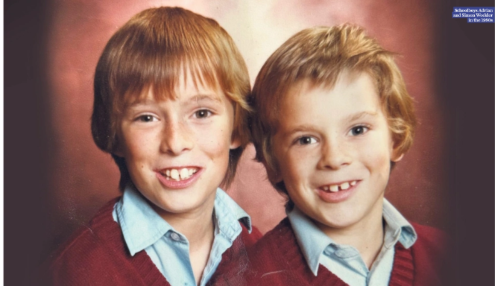
Picture above brothers Adrian and Simon Weckler as children growing up, Meath Live’s Paul Murphy covered the Coroners Court on Simon earlier this year. His brother Adrian wrote a passionate article in last Sunday’s Independent, 7 th June 2026. The revealing piece outlines the background and story of how Simon’s life changed from an articulate, intelligent, and full of life individual to the onset of paranoid schizophrenia condition. How it affected his family, his life and how the system failed him and his family. As Adrian Weckler points out, his family is not the only family having to deal with these difficulties were society is not fit for purpose.